
Holiday Hours

Monday, January 19, 2026 – Closed
In observance of Martin Luther King Jr. Day.

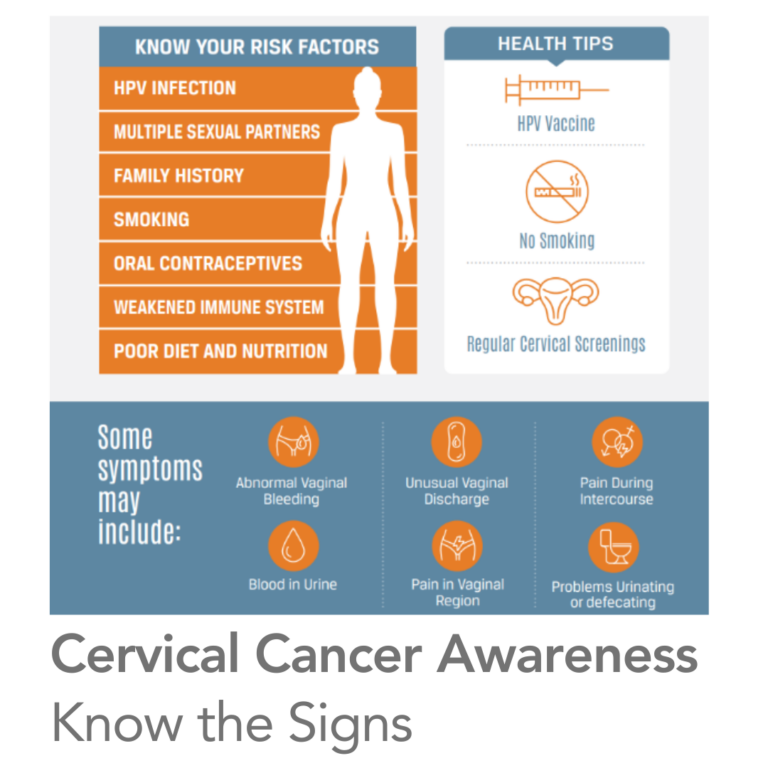
Common Symptoms of Cervical Cancer

cervical cancer awareness

In early stages, cervical cancer may not cause noticeable symptoms. As it progresses, some signs may include:

  • Abnormal vaginal bleeding (between periods, after intercourse, or after menopause)
  • Unusual vaginal discharge that may be watery, bloody, or have a strong odor
  • Pelvic pain or pain during intercourse
  • Heavier or longer menstrual periods
  • Lower back or leg pain in more advanced stages
  • Changes in bladder or bowel habits in later stages


If you experience any of these symptoms, it is important to contact your healthcare provider promptly.

Common Treatment Options

Treatment depends on the stage of cancer, overall health, and individual patient needs. A personalized care plan is created for each patient.

Surgery

  • Often used for early-stage cervical cancer
  • May include removal of abnormal tissue or a hysterectomy


Radiation Therapy

  • Uses high-energy beams to destroy cancer cells
  • May be given externally or internally (brachytherapy)
  • Frequently combined with chemotherapy


Chemotherapy

  • Helps enhance the effectiveness of radiation
  • May also be used for advanced or recurrent disease


Immunotherapy and Targeted Therapy

  • Used in certain advanced cases
  • Helps the immune system recognize and attack cancer cells

Why Early Detection Matters

When cervical cancer is caught early, treatment is often less invasive and more effective. Routine Pap tests and HPV screenings remain the best tools for prevention and early detection. These screenings can identify abnormal changes before cancer develops.

Like What You See? Share With A Friend!

Latest Doctor's Blog Articles

staying on schedule image

Why Follow-Up Matters

Follow-up appointments are an important part of staying healthy. Whether you’re managing a condition, monitoring progress, or simply keeping up with routine care, these visits help your healthcare team make sure everything is on track.

Read More »
managing stress during treatment image

Managing Stress During Cancer Treatment

Cancer treatment can bring physical, emotional, and mental challenges. Feeling stressed or overwhelmed is completely normal, but there are simple, effective ways to help manage stress and maintain a sense of control during this time.

Read More »
staying on schedule image

Why Follow-Up Matters

Follow-up appointments are an important part of staying healthy. Whether you’re managing a condition, monitoring progress, or simply keeping up with routine care, these visits help your healthcare team make sure everything is on track.

Read More »
managing stress during treatment image

Managing Stress During Cancer Treatment

Cancer treatment can bring physical, emotional, and mental challenges. Feeling stressed or overwhelmed is completely normal, but there are simple, effective ways to help manage stress and maintain a sense of control during this time.

Read More »
ending the year image

Ending the Year with Strength: Survivorship

December is a time of reflection, and for many survivors, it’s a chance to acknowledge how far they’ve come. Survivorship is more than finishing treatment—it’s learning to live well, stay empowered, and continue thriving.

Read More »