
Prostate Cancer: Understanding Risk and Screening
Learn about prostate cancer risks, symptoms, and when to get screened.
Monday, January 19, 2026 – Closed
In observance of Martin Luther King Jr. Day.
Early Detection: Detecting colorectal cancer early increases treatment success and survival rates.
Prevention: Screening can identify precancerous polyps, allowing for their removal before they become cancerous.
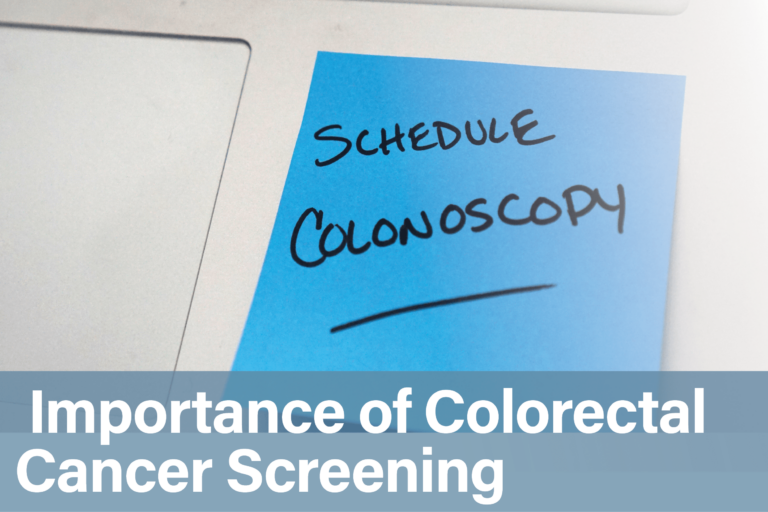
Several screening tests are available for colorectal cancer and are recommend if you are 45 and average risk. If you are high risk, or have family history, your doctor might recommend earlier screening. Please be sure to discuss screening recommendations with your physician.
Colonoscopy: A colonoscopy is considered the gold standard for colorectal cancer screening. During this procedure, a flexible tube with a camera is inserted into the colon to examine the lining for abnormalities or polyps. If polyps are found, they can be removed during the procedure.
Fecal Occult Blood Test (FOBT) and Fecal Immunochemical Test (FIT): These tests detect blood in the stool, which can be a sign of colorectal cancer or precancerous polyps. They are non-invasive and can be done at home by collecting stool samples and sending them to a lab for analysis.
Stool DNA Test (FIT-DNA): This test combines the detection of blood in the stool with the analysis of DNA markers associated with colorectal cancer. It can also be done at home by collecting stool samples and sending them to a lab for analysis.
Flexible Sigmoidoscopy: Similar to a colonoscopy, a sigmoidoscopy examines the lower part of the colon for polyps or abnormalities. However, it does not examine the entire colon.
CT Colonography (Virtual Colonoscopy): This imaging test uses a CT scanner to create detailed images of the colon. While less invasive than a traditional colonoscopy, it still requires bowel preparation and may miss small polyps.
Regular screening for colorectal cancer is essential for early detection, improved outcomes, and prevention. Talk to your healthcare provider about which screening test is right for you based on your age, risk factors, and medical history. Remember, early detection saves lives.

Learn about prostate cancer risks, symptoms, and when to get screened.

We were honored to welcome over 200 attendees to our Rise and Shine: Survivorship to Thrivership event. This Celebration of Life brought together patients, caregivers, families, and friends to connect, access resources, and support one another, no matter where they are in their cancer journey.

Learn the signs of breast cancer, the importance of screening, and how early detection can improve outcomes.

Learn about prostate cancer risks, symptoms, and when to get screened.

We were honored to welcome over 200 attendees to our Rise and Shine: Survivorship to Thrivership event. This Celebration of Life brought together patients, caregivers, families, and friends to connect, access resources, and support one another, no matter where they are in their cancer journey.

Learn the signs of breast cancer, the importance of screening, and how early detection can improve outcomes.

At cCARE, we are proud to provide Breast Cancer cancer care. May is a time for awareness, education, and prevention. Learn more about our approach by reading our latest blog.